
Cheap Car Insurance in Los Angeles: How to Find Lower Rates
Discover cheap car insurance in Los Angeles with tips to compare quotes, unlock discounts, and choose coverage that lowers your monthly premiums.
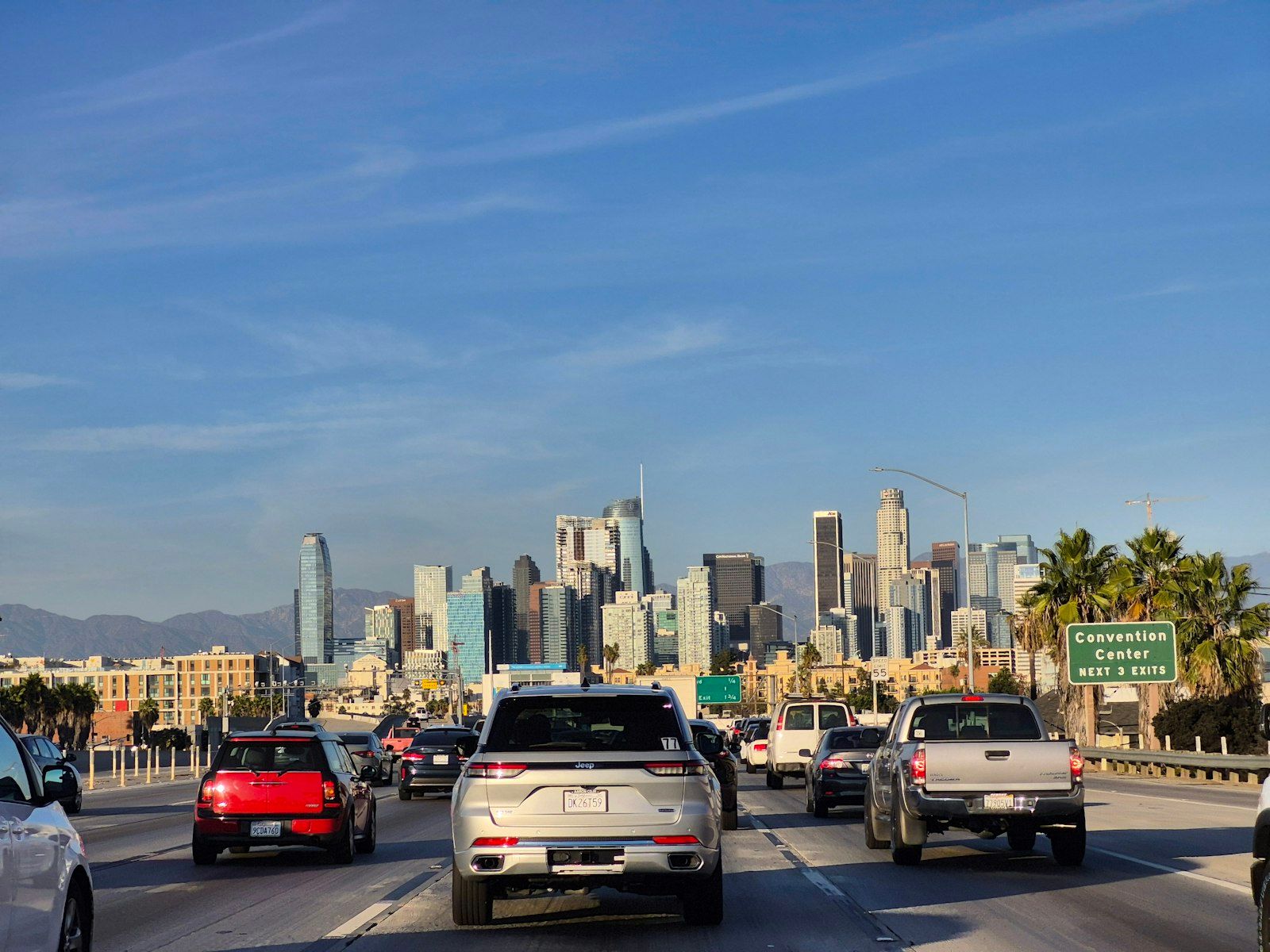
Navigating the High Cost of Driving in the Southland
Anyone who spends time behind the wheel in Southern California knows that navigating traffic on the 405, the 10, or the 101 requires patience, defensive driving, and a healthy sense of humor. What tests that patience even more is opening your monthly auto insurance renewal notice. Between dense metropolitan traffic, elevated repair expenses, and frequent accident claims, securing cheap car insurance in Los Angeles can feel like finding an open lane during Friday afternoon rush hour.
At Shieldly Premier Insurance Solutions, we spend our days examining insurance policies with a magnifying glass. We believe that finding affordable coverage should never mean signing away your financial security. You do not have to accept sky-high premiums as an inevitable reality of living in Southern California, nor should you strip your policy down to dangerous minimums just to trim a few dollars from your bill.
Finding reliable, cheap auto insurance in LA comes down to understanding how California calculates auto risk, which discounts carriers keep quiet about, and how to structure your policy limits to protect your wallet today and your assets tomorrow.
The Los Angeles Auto Insurance Landscape: Why Rates Run High
To find ways to lower your monthly premium, you first need to understand the distinct economic and regulatory forces driving vehicle insurance pricing in Los Angeles County. Insurers do not pull numbers out of thin air. Instead, they calculate rates using data-driven actuarial tables approved by the state.
California operates under unique insurance rules governed primarily by Proposition 103. Under this voter-approved measure, auto insurers are legally required to base their rates primarily on three core criteria:
- Your safety driving record, including accidents, moving violations, and traffic convictions.
- The number of miles you drive every calendar year.
- The number of years you have been licensed to drive.
Secondary factors also influence your premium, including vehicle safety equipment, garaging location, and marital status. Crucially, California is one of a handful of states that strictly prohibits auto insurers from using credit scores or biological gender to determine auto rates. That provides a level playing field for your credit rating, but it also means carriers lean heavily on your zip code, your daily driving habits, and the regional frequency of vehicle claims.
Recent state regulatory shifts have also changed baseline insurance expenses. Under Senate Bill 1107, also known as the Protect California Drivers Act, the California Department of Motor Vehicles enforces updated mandatory auto liability insurance limits. After remaining unchanged for more than five decades, the state minimum coverage requirements were increased to:
- $30,000 for bodily injury or death per person in an accident.
- $60,000 total for bodily injury or death per accident when multiple people are injured.
- $15,000 for property damage per accident.
This change addressed medical inflation and the realities of modern vehicle replacement costs, but it also prompted carriers to raise basic rates across the state. In addition, broader market pressures, including rising parts prices and complex vehicle electronics, have elevated repair costs throughout the state, as reported by the Los Angeles Times.
Because Los Angeles County has some of the highest traffic volumes, luxury vehicle concentrations, and pedestrian densities anywhere in the nation, local claims cost insurers significantly more than claims in rural areas. When drivers go hunting for cheap auto insurance in Los Angeles, they are competing directly against these urban market pressures.
The Myth of Bare-Minimum Coverage
When people ask us how to track down the cheapest car insurance in Los Angeles, California, their first impulse is often to buy a bare-bones policy with state minimum liability limits and skip everything else. That strategy might produce a low monthly payment on paper, but it frequently backfires into catastrophic out-of-pocket expenses after a collision.
Consider property damage liability. The state-mandated minimum is $15,000. Now imagine you are driving on Wilshire Boulevard or negotiating the merge onto the 110 freeway, and you accidentally slide into the rear quarter-panel of a late-model electric sedan or a luxury SUV. Repairing sensors, high-voltage battery enclosures, and aluminum body panels on a modern luxury car can easily exceed $30,000 or $40,000.
If your policy only covers $15,000 in property damage, the other driver's insurance carrier or the owner will turn directly to you for the remaining balance. They can pursue your bank accounts, place liens on your property, or garnish your wages.
The exact same risk applies to bodily injury limits. An ambulance ride, an emergency room evaluation, and a night in a regional trauma hospital can exhaust a $30,000 bodily injury limit before the patient is even discharged. Stripping your coverage down to bare minimums does not save you money; it merely transfers hundreds of thousands of dollars of personal financial risk onto your shoulders.
Our philosophy at Shieldly is built around attention to detail. True affordability means protecting your future net worth while keeping your routine premiums as manageable as possible. Understanding core insurance definitions and terms allows you to spot where you are protected and where you might be exposed.
Smart Ways to Restructure Your Policy for Lower Premiums
You do not have to settle for paper-thin coverage to keep your auto insurance in Los Angeles cheap enough to fit your household budget. In our agency practice, we find that drivers can reduce their premiums by making calculated adjustments to the underlying policy structure.
1. Optimize Your Collision and Comprehensive Deductibles
Your deductible represents the amount you pay out of pocket before your insurance coverage steps in for damages to your vehicle. Many drivers carry standard comprehensive and collision deductibles of $250 or $500 simply because that was the default when they bought the car.
If you have a stable emergency savings buffer, increasing your collision deductible from $500 to $1,000 or even $1,500 can substantially lower the collision portion of your bill. The savings can range between 10% and 25% on physical damage premiums.
You can also carry split deductibles. In high-theft neighborhoods of Los Angeles, you might choose to keep a $500 deductible for comprehensive perils, such as vandalism, glass breakage, or theft, while carrying a $1,000 or $1,500 deductible for collision. This targeted approach provides tailored protection without inflating your overall bill.
2. Re-Evaluate Older Vehicles
If you commute across Los Angeles in an older vehicle whose current fair market value is under $4,000, continuing to carry full collision and comprehensive coverage might not make financial sense.
Carriers calculate total loss settlements based on actual cash value, minus your deductible. If an older sedan is worth $3,500 and your deductible is $1,000, the maximum payout you could ever receive in a total loss is $2,500. If you are paying $800 to $1,200 annually just to keep collision and comprehensive coverage on that vehicle, you are likely overspending on insurance.
Dropping physical damage coverage while keeping high liability limits, alongside uninsured motorist protection, is often the most practical shortcut to cheap Los Angeles car insurance for older commuter cars.
3. Report Accurate Annual Mileage
Because Proposition 103 places heavy emphasis on how much you drive, your declared annual mileage directly influences your rate. Insurance companies routinely assign default mileage estimates, often between 12,000 and 15,000 miles per year, if a driver does not specify otherwise.
Since many Southern California residents transitioned to remote or hybrid work arrangements, countless Angelenos are driving far less than 10,000 miles each year. If you commute to an office only two days a week, carpool, or take the metro, let your carrier know. Submitting odometer verification to prove your actual mileage can trigger substantial discounts. A verified shift from 15,000 miles to 7,500 miles annually can yield an immediate rate reduction.
4. Protect Yourself with Uninsured Motorist Coverage
While this step involves purchasing an additional line of protection rather than cutting one, it is an essential safeguard for anyone looking for cheap auto insurance quotes in Los Angeles.
According to data tracked by the California Department of Insurance, a noticeable percentage of motorists across the state operate vehicles without valid coverage. Los Angeles County features some of the highest concentrations of uninsured and underinsured motorists in the state.
If an uninsured driver hits you, uninsured motorist bodily injury coverage steps in to pay for your medical bills, pain, suffering, and lost wages up to your chosen limit. Skipping this coverage to save a few dollars a month can leave you with no financial recourse following a hit-and-run incident or a crash caused by an uninsured motorist.
Practical Examples: How Policy Adjustments Change Rates
To see how these principles work in everyday life, consider two real-world scenarios from our daily consulting work with California drivers.
Scenario A: The Hybrid Commuter in the San Fernando Valley
Carlos lives in Sherman Oaks and commutes to an office in Century City three days a week, working from home the remaining two days. He drives a four-year-old compact crossover. When his renewal arrived, his carrier had hiked his annual premium by 18%, citing regional rate revisions.
Upon reviewing his declaration page, Carlos noticed two glaring issues:
- The insurer was rating him for 15,000 miles per year, even though his actual commute and weekend driving totaled just 8,200 miles annually.
- He was carrying a $250 comprehensive deductible and a $500 collision deductible.
By submitting an odometer photo to adjust his rated annual mileage down to 8,000 miles, Carlos trimmed his base rate by 12%. He then raised his collision deductible to $1,000 while maintaining his comprehensive deductible at $500. These simple administrative changes produced a combined annual savings of $410, completely offsetting the carrier rate increase without reducing his liability coverage limits.
Scenario B: The Multi-Car Family in East Los Angeles
The Ramirez family owns two vehicles: a newer minivan used for family road trips and school carpools, and a ten-year-old hatchback used solely by Mr. Ramirez for a short four-mile daily commute to a local job site. They felt their rates had become untenable and were searching for the cheapest car insurance Los Angeles could offer.
A thorough policy audit revealed that the older hatchback was carrying full collision coverage with a $500 deductible, costing the family roughly $70 per month for that specific vehicle's physical damage protection. The car's private sale value was roughly $2,800.
After reviewing the numbers, the family decided to drop collision and comprehensive coverage on the hatchback while keeping robust 100/300/100 liability limits and uninsured motorist coverage intact. They simultaneously bundled their personal auto insurance with their renters policy.
The elimination of full coverage on the older vehicle saved them $840 per year, and the multi-policy bundling discount lowered their total household insurance bill by another 14%. They achieved real, sustainable savings while keeping their family protected against third-party lawsuits.
How to Find and Maximize California Auto Discounts
Carriers rarely apply every discount you qualify for automatically. Finding cheap auto insurance in Los Angeles requires asking targeted questions about state-mandated programs and proprietary carrier savings programs.
Here is a checklist of high-impact discounts every Los Angeles driver should explore:
- California Good Driver Discount: Under California Insurance Code Section 1861.025, any driver who has been licensed for at least three consecutive years and has had no more than one violation point on their driving record during the prior 36 months is legally entitled to a Good Driver discount. This discount must be at least 20% below the rate the carrier would otherwise charge.
- Multi-Policy Bundling: Combining your personal auto insurance policy with a homeowners, condominium, or renters insurance policy is one of the most dependable ways to secure double-digit percentage savings across both lines of coverage.
- Multi-Car Discount: Insuring two or more vehicles on the same policy under identical household ownership regularly provides a 10% to 20% discount on liability and collision coverages.
- Mature Driver Improvement Course: California drivers age 55 and older who complete a state-approved mature driver safety course are eligible for mandatory insurance discounts for three consecutive years upon presenting their certificate of completion.
- Telematics and Usage-Based Programs: Many modern carriers offer mobile phone applications or plug-in devices that monitor driving metrics, including braking, acceleration, phone handling, and nighttime travel. For careful drivers who avoid late-night highway driving, telematics programs can unlock discounts ranging from 5% to 30%.
- Professional and Academic Affiliations: Many regional and national insurers offer affinity group discounts for alumni of California universities, members of professional unions, registered nurses, certified public accountants, engineers, and teachers.
- Vehicle Anti-Theft and Safety Features: Factory-installed anti-theft tracking systems, recovery devices, passive engine immobilizers, and forward collision warning systems can help reduce your comprehensive and collision premiums.
Why Comparing Independent Carriers Beats Captive Agents
One of the most frequent mistakes Los Angeles drivers make when looking for cheap auto insurance quotes in Los Angeles is requesting a quote from a single captive insurance company.
A captive agent works exclusively for one carrier. When that carrier increases its statewide rates or adjusts its underwriting criteria against specific zip codes, that captive agent has zero alternatives to offer you. If their proprietary algorithm prices you high, your only option with that agent is to pay the premium or strip away essential coverage.
Working with an independent agency changes the dynamic entirely. Independent insurance brokers maintain contracts with dozens of top-rated regional and national insurance carriers. Because each carrier uses different underwriting models, pricing variances between companies can be astonishing.
For instance, one carrier might penalize a minor speeding ticket aggressively while offering top-tier rates for hybrid vehicle commuters. Another carrier might offer unmatched multi-car rates for families with teen drivers but charge higher base rates for single drivers living in dense downtown zip codes.
By running your profile across a diverse network of carriers, an independent insurance professional can help you uncover the cheapest car insurance in Los Angeles, California that still provides dependable claim service and adequate coverage limits. If you want to understand how carrier selection affects your overall protection strategy, take a moment to read our breakdown on how to compare local agencies in Los Angeles.
Common Mistakes That Inflate Los Angeles Insurance Bills
In our years of reviewing insurance declarations, we see the same expensive errors repeated by drivers across Southern California. Steering clear of these pitfalls will keep your ongoing costs down and protect your driving record.
- Letting Coverage Lapse Between Vehicles: Even a brief lapse of a few days in your auto insurance history can classify you as a high-risk driver when you re-apply for coverage. Carriers frequently apply higher base rates or eliminate preferred-tier discounts for drivers without continuous prior insurance history. If you are selling a car and buying another, make sure your coverage transfers seamlessly.
- Misrepresenting Garaging Locations: Attempting to register and insure your vehicle using an address in a rural county or an out-of-state address to get cheaper rates is considered rate evasion fraud under California law. If you are involved in a major collision and the carrier discovers the car is permanently garaged in Los Angeles, they have grounds to deny the claim, cancel your policy, and leave you personally liable for damages.
- Filing Minor Nuisance Claims: Insurance is designed to protect you from catastrophic losses, not routine maintenance or minor cosmetic scuffs. In California, an at-fault accident that causes property damage exceeding a specific dollar threshold can result in a driving record point that stays on your record for three years, stripping away your 20% Good Driver discount. If a parking lot dent costs $600 to repair and your deductible is $500, paying out of pocket is far cheaper over the long run than filing a claim that could trigger premium surcharges.
- Ignoring Your Annual Policy Review: Many drivers put their policies on autopay and ignore them for five or ten years. During that time, your commute changes, tickets fall off your DMV motor vehicle record, your vehicle depreciates, and new discount programs become available. Reviewing your policy annually ensures you never pay for coverage you no longer need.
- Overlooking Broader Asset Protection: Focusing solely on auto premiums without considering your overall risk profile is short-sighted. If you own a home, have retirement savings, or run a business, a severe auto accident judgment can threaten those assets. Integrating your auto policy into a cohesive broader personal insurance coverage plan ensures there are no expensive gaps in your overall financial armor.
Finding Real Savings in the City of Angels
Lowering your auto insurance rates in Los Angeles does not require sacrificing peace of mind or putting your life savings at risk on the freeway. While Southern California drivers face genuine market challenges, from heavy congestion to rising vehicle repair costs, you maintain direct control over how your policy is structured.
By adjusting your deductibles, maintaining an accurate accounting of your annual commuting mileage, taking advantage of every discount you have earned, and comparing multiple carriers across the marketplace, you can secure cheap car insurance in Los Angeles that supports your budget without compromising your security.
Insurance should be a shield that protects everything you have worked hard to build. With a clear strategy, a careful eye on the details, and the right professional guidance, you can navigate the streets of Los Angeles knowing you have secured quality coverage at the best possible price.
Shieldly Premier Insurance Solutions
Ready to make sure you’re properly covered without overpaying? Contact Shieldly Premier Insurance Solutions for a detailed insurance review and side-by-side quotes, and we’ll walk you through your options so you can choose the right coverage with confidence.
Based in Mission Viejo and proudly serving drivers, families, and business owners throughout California, we believe in educating our clients first. Our team provides the careful attention to detail required to uncover every available discount, evaluate your true liability exposures, and shop your policy across multiple top-rated insurance carriers. Whether you want to reduce your monthly commuter expenses or restructure your family auto policy, we are here to provide clear guidance and real savings.