
California Wildfire Evacuation Insurance: Housing, Smoke, Cars, and Business
Learn how California wildfire evacuation can affect temporary housing, smoke claims, vehicles, and business income—and what to check before comparing coverage.
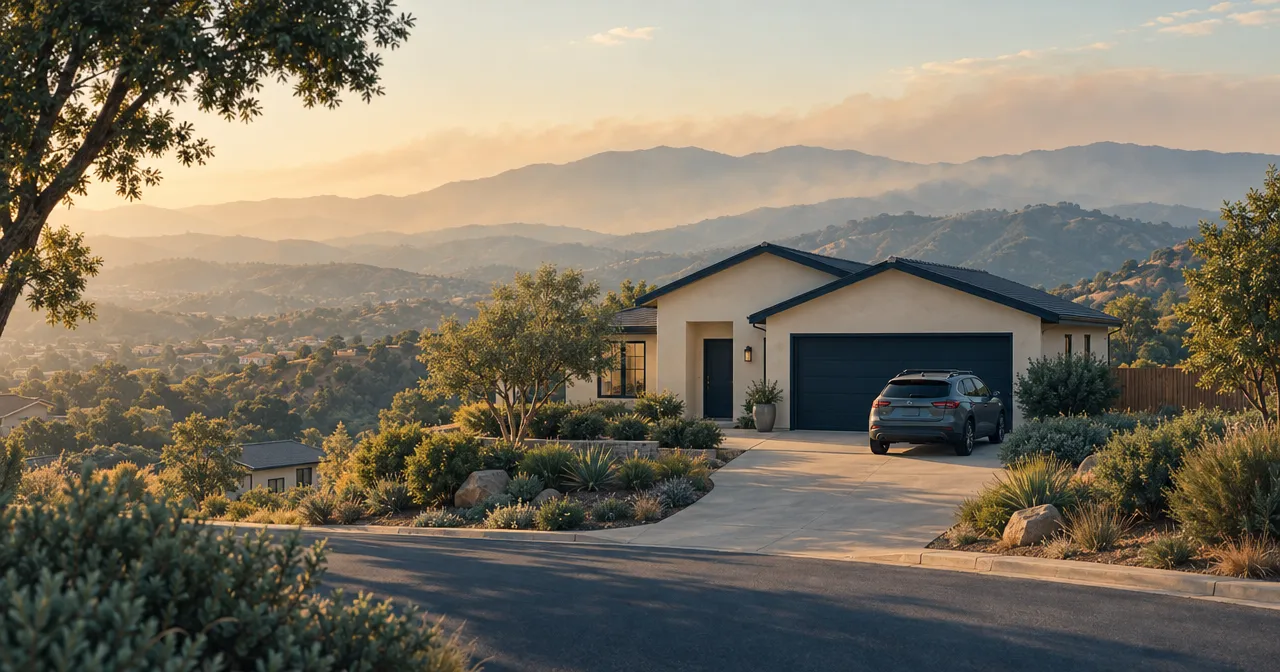
A wildfire does not have to burn your home to disrupt your household. An evacuation order can send a family to a hotel; smoke can leave a standing house needing inspection; a closed road can keep customers and employees away from a business. Those are different insurance questions, even when they arise from the same fire.
For a household in the Mission Viejo foothills, a Bay Area hillside, or a canyon neighborhood near Los Angeles or San Diego, the practical question is not just “Am I covered for wildfire?” It is: Which policy responds to which expense, what triggers it, and for how long? The answer may change if the home is insured through the California FAIR Plan and a separate difference-in-conditions (DIC) policy. Use the guide below to identify the questions to put to your insurer or licensed agent before an emergency—not to predict the outcome of an individual claim.
First, separate the three events people call “wildfire damage”
An evacuation with no known property damage. You leave under an order, pay for lodging and meals, and later return to a house that is intact. Additional living expense (ALE), often shown as loss of use, may help with qualifying increased costs. The fact that you had to leave does not by itself mean the dwelling needs a repair claim. Ask whether your policy responds to a mandatory evacuation or civil-authority restriction, and what proof and time limits apply. The California Department of Insurance (CDI) evacuation checklist says homeowners and renters should verify ALE terms and keep receipts.
Damage to the house or belongings. Fire, heat, soot, ash, or smoke may affect the structure, contents, or both. The insurer will need to determine the applicable cause of loss, extent of damage, deductible, valuation terms, and appropriate repair or cleaning. A home can be standing and still require a serious smoke assessment; it can also be unaffected. Neither result follows automatically from the distance to the fire.
Lost business activity. A shop, office, or service business may lose inventory, need temporary premises, or experience a drop in sales. Property coverage, business-income coverage, and extra-expense coverage have separate triggers and limits. Being closed because customers stayed away is not automatically the same thing as insured physical damage to your premises. Keep the household and business claims in separate files.
Temporary housing: find the ALE trigger and the real limit
ALE generally concerns the increase in reasonable living costs needed to maintain your household’s normal standard of living, not every expense you pay while away. Think temporary lodging, extra meals, storage, or additional commuting costs, subject to the policy’s terms. If you usually spend $900 a month on groceries and spend $1,250 on food during a covered displacement, the $350 increase is the relevant comparison—not necessarily the entire $1,250. This example is a budgeting illustration, not a promise that a particular bill will be reimbursed.
Before booking a long stay, ask the claims contact:
- Does ALE apply to this mandatory evacuation even if the home is not physically damaged? What about a later period when the home remains unsafe or inaccessible?
- Is the available amount a dollar limit, a percentage of dwelling coverage, a time limit, or a combination? Are there sublimits or conditions for pets, storage, or a rental deposit?
- Is there a deductible for this ALE claim, and what records will the adjuster accept? If we need to move to another rental, should we obtain approval first?
A renters or condo policy can have loss-of-use protection too, but do not infer the amount from the building owner’s or association’s policy. An owner of a rental property should distinguish fair rental value or lost rent from personal ALE for the owner’s own hotel. If your family includes pets, ask the hotel about restrictions and ask the insurer whether additional pet-friendly lodging expense is part of the covered increased cost; pet health insurance is not a substitute for housing coverage. Save the evacuation order, dates you were away, cancellation terms, receipts, and your normal expense baseline.
Smoke claims: document the condition, then ask for an investigation
When you can safely return under local authorities’ directions, record visible residue, odors, damaged contents, and the rooms affected before cleaning or discarding anything. Photograph labels and serial numbers for damaged equipment, and keep any contractor or cleaning estimates. Report the condition promptly and ask the insurer what inspection, testing, cleaning, or replacement it will arrange. Do not expose yourself to hazardous debris or commission expensive testing solely on the assumption that an insurer will reimburse it; discuss the scope first.
CDI has said insurers should properly investigate reported smoke damage, rather than deny a claim without an appropriate investigation, and has addressed professional testing when warranted in a particular case. Its smoke-claims guidance is useful context, but it does not make every odor, every test, or every proposed remediation automatically covered. The policy wording, evidence, and facts of the loss still matter.
Also ask how the claim would be settled. Replacement cost and actual cash value can produce different payments; roofs or particular belongings may have special terms. A replacement-cost provision may require actual repair or replacement before the full eligible amount is paid. If a home needs substantial rebuilding, check whether the dwelling limit reflects local construction costs, whether an extended-replacement-cost endorsement applies, and what limits exist for code upgrades, debris removal, contents, and loss of use. The sale price and mortgage balance are not a reliable rebuild estimate.
If the home uses FAIR Plan plus DIC, read both contracts
After a nonrenewal or difficulty finding a standard homeowners policy, a California homeowner may need to consider the FAIR Plan. Its dwelling policy overview describes named-peril protection that includes fire and smoke, with some optional coverages available; it is not automatically equivalent to a conventional homeowners package. The specific form, selections, and exclusions control what is insured.
A separate DIC policy may address selected gaps such as water damage, theft, and liability, but the FAIR Plan does not issue that policy. Ask the agent to lay both declarations and forms side by side. Which policy, if either, provides your family’s temporary housing expense after an evacuation? Which covers smoke-damaged contents, and on what settlement basis? Does either include personal liability for this property? Are the same structures, occupancy, and dates described in both? Do not confuse a landlord’s fair-rental-value provision with an owner-occupant’s ALE. The label “DIC” alone cannot answer these questions.
A hard-to-place home near brush needs this review before the current policy expires. An online estimate or application does not prove coverage is in force. Confirm acceptance and effective dates in writing, and check with the lender if there is a mortgage. If you later obtain a more conventional policy, compare the entire combined FAIR Plan/DIC cost and protection—not just one premium. Separate earthquake and flood protection may also be relevant; neither should be assumed to follow from the word “wildfire” in a quote.
A car, an RV, and personal liability are different losses
If wildfire damages a parked car, the question is usually whether that vehicle has comprehensive physical-damage coverage, which can address fire, subject to its deductible and claim terms. Collision addresses a different kind of damage, such as hitting an object while driving; liability coverage protects against qualifying injuries or damage you cause to others, not the loss of your own vehicle. CDI’s auto insurance guide explains those distinctions.
If evacuation requires a rental car because your own car is damaged, check whether you selected rental-reimbursement coverage and whether this claim meets its conditions. A boat, RV, motorcycle, ATV, or trailer should be checked under its own policy and storage/use terms, not assumed covered because it sat at the house. Someone who lives temporarily in an RV should not assume the RV policy pays the same expenses as homeowners ALE. Keep photos, vehicle identification, towing records, and the location of each item.
A personal umbrella can increase liability protection above qualifying underlying policies; it does not rebuild the home, repair the car, or pay for hotel nights. If a homeowner replaces conventional liability coverage with a FAIR Plan arrangement, ask the umbrella carrier to confirm its underlying-coverage requirements. Life insurance addresses the financial effect of a death on dependents; it is not a wildfire repair fund. An annuity serves a different financial purpose and should not be described as evacuation insurance.
For a business, check property, income, vehicles, and people separately
Consider a small Los Angeles retailer that must close for ten days because of a nearby fire. If the premises and inventory are undamaged, lost sales are not necessarily covered simply because the owner had to close. If a covered fire damages insured property, business-income coverage may respond to a qualifying interruption, and extra-expense coverage may help with eligible costs of continuing operations. Civil-authority provisions may address some access restrictions under their own requirements. Ask about a waiting period, income limit, period of restoration, covered location, and the evidence needed. CDI’s commercial insurance guide describes a business owners policy (BOP) as a package that can combine property, general liability, and business interruption for qualifying operations; the actual policy controls.
Do a separate check for inventory at another location, tools in transit, a temporary workspace, and changes in payroll or operations since the last renewal. General liability is for certain claims by others, not a substitute for business property or lost-income coverage. Commercial auto and hired/non-owned auto questions matter if staff use vehicles for work or begin delivering goods. California employers also need workers’ compensation for employees; it serves workplace injury needs, not the store’s interrupted revenue. A business that shifts from office appointments to deliveries or opens a second site should update the insurer’s description of its operations before assuming the old BOP still fits.
Compare the quote for this scenario, not just its premium
An AI application or online comparison tool can organize options quickly, but a screen showing a price may not show the carrier’s final underwriting decision or the full contract. For each proposed home, auto, or business policy, ask for the written quote and record these items in one comparison sheet:
- Property and people: address, occupancy, roof information, insured buildings, vehicles and drivers, business locations, activities, employees, and any seasonal or rental use.
- What triggers payment: evacuation/civil authority, smoke, fire, business interruption, and whether physical damage is required for each benefit.
- Limits and clocks: dwelling rebuild amount; contents; ALE dollar and time limits; business income and extra expense; vehicle values; liability and umbrella minimum underlying limits.
- Your share and how claims settle: flat versus percentage deductible, replacement cost versus actual cash value, roof or contents schedules, and code-upgrade or extended-replacement-cost endorsements.
- Missing or conditional items: FAIR Plan/DIC coordination, flood and earthquake, pet-friendly relocation needs, rental vehicle coverage, commercial vehicles, stored recreational equipment, and unapproved underwriting conditions.
For perspective, a 1% deductible calculated against a $900,000 dwelling limit is $9,000 under that definition, not 1% of a smaller repair bill. That is an arithmetic example only; different forms use different bases and perils. If an online proposal cannot explain its percentage deductible, ALE limit, smoke terms, or whether an offer is bindable, those are questions to resolve before selecting it. Shieldly can help gather existing policy details with technology, including Canopy Connect, and have a licensed agent compare the actual terms. Its AI Quote Check is available for AI-generated or online proposals.
Keep a small claim file before you need one
Save current declarations pages and policy forms where you can reach them away from home. Make a short inventory or walk-through video, record major home upgrades, and keep the receipts for valuable contents. For a business, preserve inventory, payroll, and sales records that can help establish an interruption. In an emergency, follow evacuation orders first; insurance paperwork can wait until you are safe. Then log the order dates, contacts with the insurer, claim number, photos, and incremental expenses. Ask the claims professional which documentation is needed before committing to major remediation or a long-term rental.
Wildfire planning is not about finding one policy with a reassuring label. It is about knowing which expense belongs to home, auto, specialty, or business coverage—and where a FAIR Plan/DIC combination or an online quote needs more careful reading. If you would like clear explanations of your own limits, deductibles, and likely gaps, contact Shieldly for a detailed policy review or quote comparison. The Mission Viejo team works with California households and businesses to help them choose suitable protection.