
Best Car Insurance in Los Angeles: How to Compare Coverage and Value
Compare the best car insurance in Los Angeles with our practical guide to coverage, costs, quotes, and value so you can choose smart, affordable protection
Navigating the Los Angeles Auto Insurance Dilemma
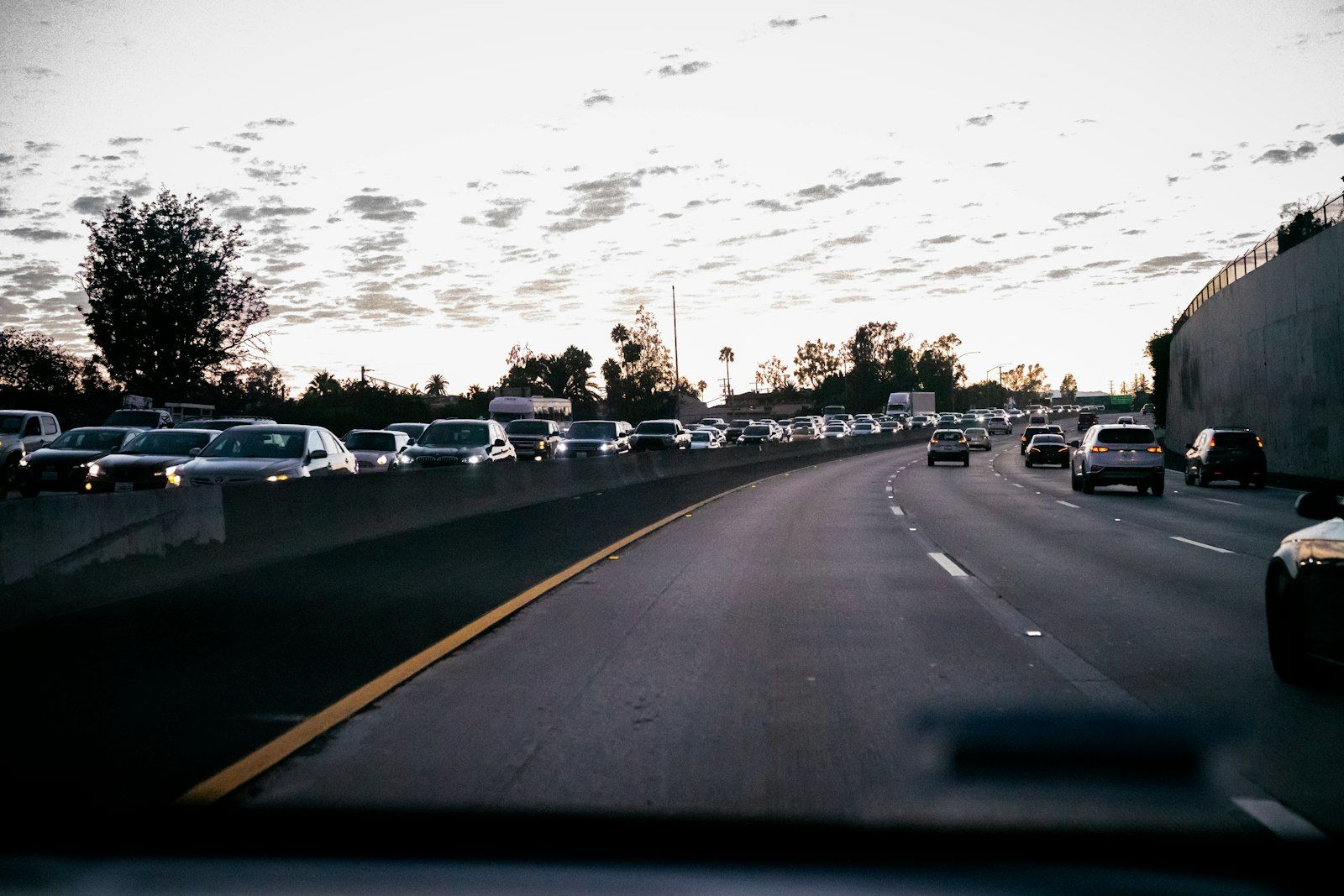
Anyone who has spent time sitting on the 405 at rush hour, dodging construction near Downtown, or navigating tight street parking in Koreatown knows that driving in Southern California is an intense experience. The sheer density of vehicles, the mix of high-end luxury automobiles, and complex freeway interchanges create an environment where an accident can happen in the blink of an eye. When shopping for the best car insurance in Los Angeles, motorists frequently discover that the marketplace is just as congested as the freeways.
The core question drivers ask us every week is simple: what actually constitutes the best auto insurance in Los Angeles? The answer is never a generic, one-size-fits-all policy from the company with the flashiest television commercials. True value in personal auto coverage is not about purchasing the cheapest possible slip of paper to put in your glove box. Rather, finding the best car insurance in LA means establishing an exact balance between robust financial protection, dependable claims service, and an equitable premium that fits your budget.
If an auto policy saves you fifty dollars a month but leaves your personal savings, home equity, or future wages vulnerable after a multi-car collision, that policy is not a bargain. In our experience working with California motorists, the right policy functions as an economic shield designed specifically for the unique legal, demographic, and geographical conditions of the Southland.
The Realities of Driving in LA: Why Bare-Minimum Coverage Leaves You Exposed
To choose the best car insurance for Los Angeles, you must first understand the ground-level risks you encounter every time you pull out of your driveway. Los Angeles County features some of the highest traffic volumes in the nation, and that congestion directly impacts your insurance exposure.
California modernized its mandatory financial responsibility requirements through Senate Bill 1107. For 57 years, California drivers operated under limits established in 1967, which required only $15,000 for bodily injury per person, $30,000 per accident, and $5,000 for property damage. State law now mandates minimum standard auto liability limits of $30,000 for bodily injury or death per person, $60,000 per accident, and $15,000 for property damage. While this legislative shift was a long-overdue step forward, carrying only state minimum coverage remains dangerous for Los Angeles drivers.
Consider the reality of property damage in Southern California. On roads like Wilshire Boulevard or the Pacific Coast Highway, a substantial portion of the vehicles around you are electric vehicles, high-end European sedans, or luxury SUVs equipped with complex sensor arrays and composite panels. A $15,000 property damage limit can be completely exhausted by a minor fender bender involving a modern vehicle, where replacing a single bumper assembly and recalibrating the cameras and radar units can easily exceed several thousand dollars. If you cause a multi-car pileup during morning rush hour, damages can quickly climb past $50,000. Under California law, you are personally liable for any costs exceeding your policy limits, putting your personal assets directly on the line.
Bodily injury exposure presents an even greater hazard. Medical care in urban California trauma centers is exceptionally expensive. An emergency room visit, imaging, and a brief hospital stay can exceed $30,000 within twenty-four hours. If you cause an accident resulting in serious injuries to multiple occupants of another vehicle, the $60,000 per-accident minimum will vanish almost immediately.
Another critical factor is the prevalence of uninsured and underinsured motorists. Despite statutory requirements enforced by the California DMV, a noticeable percentage of motorists operate vehicles without adequate insurance. If an uninsured driver strikes your vehicle or flees the scene of a crash, your only safety net is the coverage built into your own policy. Navigating the nuances of auto insurance in Los Angeles begins with recognizing that standard minimums are merely a starting legal threshold, not a prudent financial plan.
Physical damage hazards distinct to Los Angeles must also be factored into your policy design:
- Dense residential street parking that heightens the likelihood of sideswipes, hit-and-run incidents, and vandalism.
- High regional occurrences of catalytic converter and wheel theft.
- Canyon and hillside risks, where brush fires, falling rocks, and sudden flash floods cause sudden comprehensive claims.
- Lengthy commute distances across disparate microclimates, increasing vehicle wear and the odds of mechanical disablement.
A Practical Framework: Evaluating Price, Service, and Protection
Securing the best los angeles auto insurance requires looking at insurance through three interrelated pillars: coverage depth, claims performance, and pricing mechanics. When these three elements align, you achieve true insurance value.
Pillar 1: Coverage Depth and Policy Structure
The foundation of any serious auto policy is its liability limits. Instead of state minimums, well-structured policies in Southern California typically carry liability limits of 100/300/100 ($100,000 bodily injury per person, $300,000 per accident, and $100,000 property damage) or 250/500/250. The difference in premium between state minimum limits and robust 100/300/100 coverage is often surprisingly modest, frequently amounting to less than the cost of a couple of casual dinners out each month.
Beyond basic liability, you need to verify how your policy handles the physical vehicle and unexpected travel disruptions:
- Uninsured and Underinsured Motorist Bodily Injury (UM/UIM): This is non-negotiable protection in Los Angeles. We consistently advise matching your UM/UIM limits directly to your personal bodily injury liability limits. If someone carrying minimum coverage causes you severe injuries, your own underinsured motorist coverage steps in to cover medical expenses, rehabilitation, and lost earnings up to your chosen limit.
- Comprehensive and Collision Coverage: Comprehensive covers perils like theft, fire, vandalism, glass damage, and collisions with animals. Collision covers damage resulting from an accident with another vehicle or object. Calibrating your deductibles (such as selecting a $1,000 deductible rather than $500) can generate substantial premium savings that offset the cost of higher liability limits.
- Rental Car Reimbursement: In a city where life grinds to a halt without a vehicle, rental reimbursement is vital. Many standard policies default to $30 per day with a $900 maximum. In Southern California, where auto body repair shops experience ongoing supply chain bottlenecks and extended repair timelines, $30 per day barely rents an economy compact, and a thirty-day cap can expire before parts arrive. Opting for $50 per day or higher provides realistic mobility while your car is in the shop.
- Original Equipment Manufacturer (OEM) Endorsement: For late-model cars, ensuring that repairs use genuine manufacturer parts rather than aftermarket alternatives preserves vehicle safety systems and resale value.
Drivers who want a deeper look at specific contract terms can explore our breakdown of auto coverage definitions to understand how these provisions function during a loss.
Pillar 2: Service and Claims Execution
Insurance is a legal promise, and the quality of that promise is tested only when you file a claim. In Los Angeles, the claims infrastructure of an insurer makes a massive difference in your post-accident experience.
A strong claims department maintains established relationships with reputable direct repair facilities throughout Los Angeles County, deploys responsive local claims adjusters, and provides streamlined digital tools for photo estimates. Independent customer evaluations, including annual auto claims satisfaction reports from J.D. Power, repeatedly demonstrate that claim resolution speed, transparent communication, and fair initial estimates separate elite carriers from substandard ones.
Financial stability is equally important. Choosing an insurer with a solid Financial Strength Rating from agencies such as AM Best ensures that the company possesses the capital reserves necessary to pay out claims even in periods of economic stress or localized natural disasters.
Pillar 3: True Price and California Rating Mechanics
Price matters, but you must evaluate price through the lens of California insurance regulations. In many states, carriers price policies based on credit scores, gender, and marital status. In California, voter-approved Proposition 103 strictly regulates how auto insurance rates are determined.
Under regulations administered by the California Department of Insurance, the primary mandatory factors used to set your auto premium must be:
- Your driving safety record (including accidents and traffic convictions).
- The number of miles you drive annually.
- Your years of driving experience.
Credit scores cannot be used to calculate auto insurance premiums in California. Furthermore, Proposition 103 mandates that insurance companies offer at least a 20 percent Good Driver discount to individuals who have maintained a clean driving record for the previous three years.
Because annual mileage is one of the top rating factors, verifying your actual commute is a critical step in lowering costs. If you transitioned to a hybrid work schedule or reduced your driving habits, reporting an accurate odometer reading rather than letting an insurer assign an inflated default mileage figure can save hundreds of dollars annually. To explore personalized policy designs, you can review our personal auto insurance coverage options.
Comparing the Best Auto Insurance Companies in Los Angeles
When evaluating the best auto insurance companies in Los Angeles, motorists are often surprised to discover how significantly underwriting guidelines vary from one carrier to another. One insurer may specialize in low-mileage urban commuters, while another offers the most competitive rates for multi-car suburban households.
Generally, the best car insurance companies in Los Angeles can be grouped into three distinct categories:
Large Direct Writers
National direct carriers maintain broad digital capabilities, sophisticated mobile applications, and extensive marketing presences. They appeal to drivers who prefer self-service management and quick digital quoting.
- Advantages: 24/7 digital policy management, automated claims intake, and established national repair networks.
- Trade-offs: Service can feel impersonal during complex claims. In addition, automated rate adjustments during regional underwriting shifts can lead to abrupt renewal increases without personalized guidance on how to mitigate them.
California Regional Specialists and Member-Based Carriers
Carriers with deep California roots often have tailored underwriting profiles that align closely with state regulations and local driving patterns.
- Advantages: Extensive familiarity with Southern California repair labor rates, established local claims presence, and competitive baseline rates for qualified good drivers.
- Trade-offs: They may enforce stricter eligibility requirements regarding minor moving violations, or require specific professional or institutional affiliations.
Independent Agency-Represented Insurers
Carriers that distribute their products through independent agents include some of the oldest and most financially sound institutions in the country.
- Advantages: Exceptional flexibility in policy customization, expansive umbrella policy pairing, and access to unique endorsements such as OEM parts replacement or agreed-value coverage.
- Trade-offs: Quoting usually requires working through a licensed professional rather than clicking through a five-minute instant checkout, though this extra step ensures proper coverage structure.
To illustrate how these considerations play out in practice, consider two common Los Angeles driving profiles:
Case Example 1: The Remote Hybrid Commuter in Culver City
Marcus works as an independent media consultant, commuting from Culver City to Burbank only two days per week. The rest of the week, his sedan remains parked in his apartment building's shared garage. He drives approximately 6,500 miles annually.
When Marcus reviewed his renewal policy, he realized his carrier had him rated for a standard 12,000-mile commute. By providing verified odometer documentation, raising his collision deductible from $500 to $1,000, and elevating his liability coverage from minimum limits to 100/300/100, his premium actually decreased by eight percent. He secured significantly better liability protection and added rental car reimbursement while paying less out of pocket, simply by correcting his rating tier.
Case Example 2: The Multi-Vehicle Family in the San Gabriel Valley
Elena and David own a home in Pasadena with two vehicles and a seventeen-year-old high school driver. When their teenage son was added to their policy, their premium spiked dramatically.
Instead of stripping coverage down to state minimums to cut costs, an approach that would have exposed their home equity to severe risk, they took advantage of California Good Student discounts, enrolled the teen in an approved safe-driver educational program, and bundled their auto policies with their residential coverage. Working with an independent advisor allowed them to place their coverage with a carrier that offered favorable multi-policy credits, maintaining 250/500/250 limits with an umbrella policy without overpaying.
When motorists take time to compare car insurance quotes in Los Angeles, identifying these carrier-specific differences is essential to achieving maximum value.
Local Realities Every LA Driver Must Account For
Determining the best car insurance in Los Angeles, CA requires acknowledging several localized factors that do not exist in other parts of the country:
ZIP Code Variations Across Los Angeles County
Under California insurance regulations, territory is an approved optional rating factor. Consequently, what you pay for auto insurance can vary considerably depending on whether your vehicle is garaged in Santa Monica, Van Nuys, West Covina, or Downtown Los Angeles. Areas with higher rates of vandalism, elevated pedestrian density, or frequent intersection collisions carry higher baseline loss costs. While you cannot change your address solely to save on insurance, understanding your ZIP code profile helps you anticipate your premium baselines.
Advanced Vehicle Technology and Repair Bottlenecks
Los Angeles is one of the most EV-dense metropolitan areas in the world. Modern vehicles are packed with advanced driver-assistance systems, including ultrasonic sensors, radar brackets, and optical cameras embedded within bumpers and windshields. In an urban accident, what once was a straightforward body repair now requires sensor recalibration and certified technician labor. When evaluating a policy, confirm that your comprehensive and collision coverage does not impose arbitrary repair-cost caps that could leave you disputing bills with an auto body facility.
Practical Strategies to Lower Costs Without Cutting Core Protection
Drivers can lower their ongoing expenses without sacrificing essential liability protection:
- Verify your actual annual mileage: If your driving habits change, notify your insurer immediately with an updated odometer reading.
- Review deductibles pragmatically: Increasing your comprehensive and collision deductibles to $1,000 can yield noticeable savings, provided you maintain an emergency fund to cover that out-of-pocket sum if an accident occurs.
- Ask about mature driver discounts: Drivers age 55 and older who complete a state-approved mature driver improvement course are eligible for mandatory premium discounts under California law.
- Bundle personal lines: Pairing personal auto insurance with renters, condo, or homeowners coverage remains one of the most effective ways to earn double-digit percentage discounts across all policies.
Motorists seeking budget-friendly solutions without forfeiting protection can review our detailed strategies for lowering car insurance rates in Los Angeles.
A Side-by-Side Policy Comparison Checklist
When you gather quotes from competing carriers, do not simply compare the final dollar amounts on the first page. A lower price almost always signals lower coverage limits or omitted endorsements. Use this checklist to conduct an accurate side-by-side assessment:
- Bodily Injury Liability: Are the limits identical across all proposals (for example, comparing 100/300 against 100/300 rather than 100/300 against 30/60)?
- Property Damage Liability: Does the policy provide at least $50,000 to $100,000 to account for modern vehicle values on Los Angeles freeways?
- Uninsured/Underinsured Motorist: Are both bodily injury and property damage components included, and do they match your primary liability limits?
- Physical Damage Deductibles: Are collision and comprehensive deductibles matched dollar-for-dollar across every quote?
- Annual Mileage Rating: Is your declared annual mileage identical across all quotes, ensuring one carrier is not artificially underestimating your commute to show a lower rate?
- Rental Reimbursement Limits: Does the daily allowance realistically cover current rental rates in the area ($50 or more per day), and is the policy cap adequate for extended repairs?
- Payment Schedules and Fees: Does the quote include unexpected installment processing fees, high down payments, or electronic funds transfer discounts?
Drivers managing multiple personal assets should evaluate their broader portfolio through an integrated personal insurance strategy to ensure their auto, property, and umbrella policies work together seamlessly.
Choosing Long-Term Value Over Short-Term Bargains
The roads of Los Angeles demand your full attention, and your auto insurance policy deserves that same level of care. Driving without adequate protection on our complex freeway system is an unnecessary financial gamble.
The best auto insurance is not simply the policy with the lowest initial price tag. It is the policy that answers the call when you are standing on the shoulder of the road waiting for assistance, the policy that covers the medical bills when an uninsured driver collides with your car, and the policy that preserves your hard-earned assets against catastrophic liability claims. By evaluating coverage depth, claims reliability, and true California rating factors, you can put together a policy that delivers genuine security every time you get behind the wheel.
Shieldly Premier Insurance Solutions
Ready to make sure you are properly covered without overpaying? Contact Shieldly Premier Insurance Solutions for a detailed insurance review and side-by-side quotes, and we will walk you through your options so you can choose the right coverage with confidence. Our team takes pride in the attention to detail required to navigate California's complex insurance landscape, helping you secure real protection at competitive rates. Reach out to us today to get started with an independent, objective policy review.